
Introduction
Technical SEO for a B2B website is the foundation that supports all your other marketing efforts. Without it, even the most brilliant content can remain invisible to search engines and your target audience. For B2B companies, where sales cycles are long and decisions are high-stakes, getting your technical SEO right is essential.
The following guide explains the technical SEO essentials to ensure your site is built to perform, attract, and convert. At the end of the blog, find a downloadable technical SEO checklist.
Highlights:
Top 5 technical SEO checklist for B2B websites
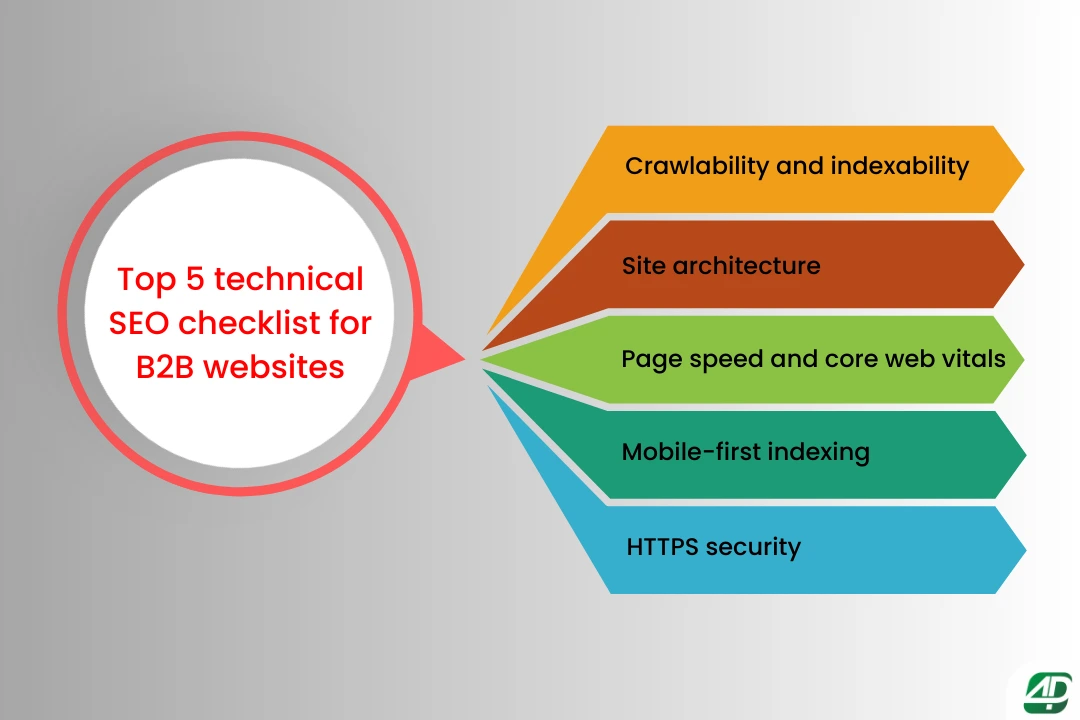
1. Crawlability and indexability: :
If search engines can't find and understand your pages, you are invisible. This is step zero.
- XML sitemap: Ensure you have a current XML sitemap that lists all your important pages (especially key service/product pages and blog posts) and submit it to Google Search Console.
- Robots.txt file: Check your robots.txt file to make sure you aren't accidentally blocking search engines from crawling critical sections of your site. This file tells crawlers where they can't go, so a mistake here can be catastrophic.
- Check for 'Noindex' tags: Are your most essential pages inadvertently tagged with noindex? Use a crawler tool like Screaming Frog to ensure your high-value pages are set to index.
2. Site architecture :
A logical site structure helps both users and search engines navigate your content.
- Flat hierarchy: Aim for a shallow site structure. Users should be able to reach any page from your homepage in 3-4 clicks or fewer.
- Descriptive URLs: Your URLs should be simple, readable, and include keywords. For example: yourcompany.com/services/digital-marketing/SEO is far better than yourcompany.com/p?id=123&cat=45.
- Internal linking: Use a robust internal linking strategy. Link from your blog posts to relevant service or product pages to pass authority (link equity) and guide users toward conversion.
3. Page speed and core web vitals :
B2B buyers are busy. A slow-loading site is a fast way to lose them. Google also uses page speed as a key ranking factor.
- Analyze page speed: When a user lands on the page, to capture their attention within seconds, the loading speed of your page matters. Google’s PageSpeed measures your site against core web vitals and provides specific recommendations for improvement.
- Image optimization: Compress images without sacrificing quality. Use modern formats like WebP.
- Enable browser caching: Instruct browsers to store static assets (like your logo and CSS) so returning visitors have a faster experience.
- Minify code: Reduce the size of your HTML, CSS, and JavaScript files by removing unnecessary characters.
4. Mobile-first indexing :
Google predominantly uses the mobile version of your content for indexing and ranking. If your mobile site is broken, your rankings will suffer.
- Responsive design: Your website must seamlessly adapt to all screen sizes. Test it on various mobile devices.
- Readable text: Avoid tiny fonts and buttons that are too close together. Zoom and text resizing should work correctly.
- Mobile-friendly test: Use Google's mobile-friendly test for a quick pass/fail assessment and highlight critical issues.
5. HTTPS security :
An unsecured website (HTTP) is a major red flag. HTTPS (the "S" stands for "Secure") encrypts data between a user's browser and your server.
- Install an SSL certificate: Most hosting providers offer free SSL certificates.
- Ensure full-site HTTPS: Every page and all assets (images, scripts) should be served over HTTPS to avoid "mixed content" warnings, which scare away visitors.
This combination of honesty and relatability strengthens trust, loyalty, and audience connection.
How The 4P Solutions can help you?
If your website is not performing well, then it’s not the content that is to blame. It might be a technical issue with your website, too. That is where The 4P Solutions, a digital marketing agency, steps in.
Our team conducts full-scale technical SEO audits, identifies leaks in your digital pipeline, and implements fixes that directly improve visibility, rankings, and qualified lead flow. We provide technical SEO audits for websites tailored to B2B companies.
Connect with The 4P Solutions at mktg@the4psolutions.com or call us at +91 85919 37177 to learn more.
Conclusion
A B2B website SEO best practice ensures your B2B website is functional and trustworthy. When your site's technical health is strong, everything else performs better: your content, your ads, your brand authority, your conversions.
Ignoring the technical SEO checklist is one of the biggest mistakes you can make for your B2B company.
Downloadable Technical SEO Checklist
FAQ’s:
Once every quarter is ideal, especially for large or frequently updated websites.
Accidentally blocking critical pages with a robots.txt or noindex tag.
Yes. A technically optimized website improves discoverability and aligns search intent with the right user journeys.
Yes. Schema improves SERP visibility and helps Google understand complex service offerings.