

Introduction
Why is digital reputation management important for your firm? Well, in B2B marketing, a good reputation attracts better clients and talent.
Even before approaching any company, people tend to research it online first. This builds a specific reputation in people’s minds, even before they reach you personally. This is why a B2B digital reputation management strategy is now essential.
Highlights:
What is ORM?
Online reputation management is the method by which actions are taken to influence the online perception of people or a brand. It involves monitoring, influencing, digital listening, and managing the online conversations.
In industrial marketing, various proactive actions take place to build a good reputation and resolve any backlash swiftly.
5 Key pointers to build a strong B2B digital reputation
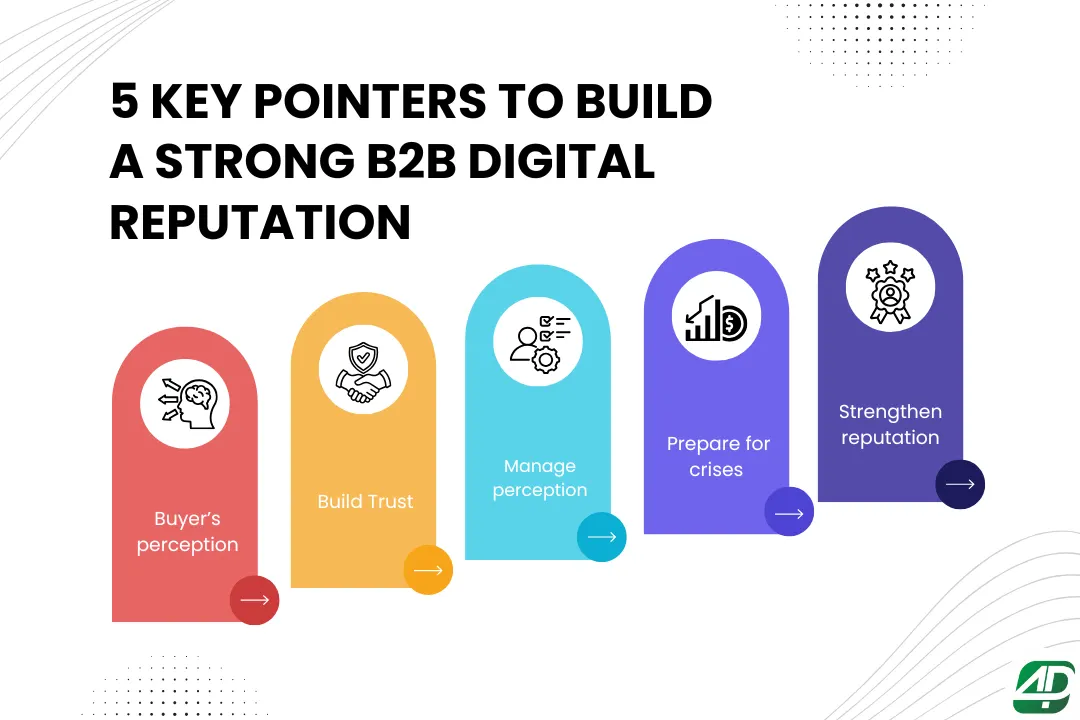
1. Buyer’s perception :
Buyers judge credibility long before speaking to sales, and even minor inconsistencies can create doubts. Digital brand perception starts with knowing how your company appears across platforms. Monitoring the social media discussions, doing social listening, and evaluating the reputation across the platforms.
Online reputation monitoring for B2B brands helps uncover gaps, recognise patterns, and identify potential problems. This evaluation also spots negative signals early, assesses public opinion, and ensures messaging is consistent.
2. Build trust :
Trust is earned, not claimed. To earn trust, a proactively engegement with your users makes them feel seen and credible. The brands that maintain clarity and consistency in messaging establish stronger digital credibility building.
Content, thought leadership, and client-facing communications should reinforce expertise. Timely and genuine thought sharing is important when dealing with your audience.
3. Manage perception :
In B2B industries, buyers notice reviews and post opinions. Online review management for B2B businesses builds visibility and response. How a company handles feedback influences perception more than the review itself.
A popular example is Dove, which struggles to connect with its young audience. As they changed their ORM strategy to a real beauty campaign. The results were immediate, with a 5x increase in sales. This helped strengthen their brand trust and credibility in the market.
4. Ready to decide :
The brand faces issues, and backlash online is inevitable. Delays, miscommunication, or project setbacks happen. Hence, online reputation management requires a reasonable and quick response to minimise the reputation damage online.
To do that, follow clear communication, stay calm, and consistent. Crisis response strategy for B2B companies ensures how a brand handles challenges. It often impacts long-term credibility more than marketing campaigns ever could.
5. Strengthen reputation :
Reputation is built over time. Regularly publishing credible content, engaging with clients, and maintaining alignment across channels gradually improves digital brand perception in B2B companies. Brands that invest in steady, intentional efforts see stronger trust, smoother conversations, and shorter decision cycles.
How The 4P Solutions can help you?
A reputation is managed by consistent communication and an effective strategy. At The 4P Solutions, we are a B2B digital marketing agency in Mumbai. We help B2B companies implement a structured B2B digital reputation management strategy.
From online reputation monitoring for B2B brands to proactive digital credibility building for B2B companies, we make sure your messaging is consistent, visible, and trustworthy. Our approach strengthens B2B brand trust and credibility enhancement and prepares businesses for challenges. Connect with The 4P Solutions. At mktg@the4psolutions.com or call us at +91 85919 37177 to learn more.
Conclusion
In B2B companies, buyers trust what they observe consistently, not what brands occasionally claim. A B2B digital reputation management strategy builds a strong digital presence backed by a clear reputation. This strategy reduces friction, builds confidence, and shortens user decision cycles.
FAQ’s:
The B2B buyer journey typically includes awareness, consideration, and decision. Each stage reflects a shift in buyer intent, from recognising a problem to evaluating solutions and selecting a vendor. Your B2B marketing strategies should address each stage uniquely.In the B2B industry, buyers often research extensively before engaging with a brand. A strong B2B digital reputation management strategy ensures consistent and credible messaging across platforms, building trust early and reducing hesitation during decision-making.
It involves tracking mentions, feedback, and brand signals across digital channels. Effective monitoring helps businesses address concerns promptly, maintain credibility, and reinforce digital brand perception improvement in B2B over time.
Positive reputation builds confidence with decision-makers, which can shorten evaluation periods. Brands with strong digital credibility often experience smoother conversations and faster approvals, enhancing overall B2B brand trust and credibility.
Yes. Even limited reviews influence buyer perception. Responding professionally to feedback strengthens trust, demonstrates reliability, and supports a consistent digital credibility building for B2B companies.
Having a clear crisis response strategy for B2B companies is key. Anticipating challenges and communicating transparently helps preserve trust, protect brand integrity, and ensure long-term B2B brand trust and credibility enhancement.